Paediatric ophthalmology
ZLATA Children’s Clinic welcomes its youngest visitors!
We inform you that the children’s clinic “Zlata” operates according to the following schedule: from Wednesday to Sunday, from 9:00 AM to 5:00 PM.
The registration center is open daily from 9:00 AM to 7:00 PM and schedules appointments for children at a time convenient for you.
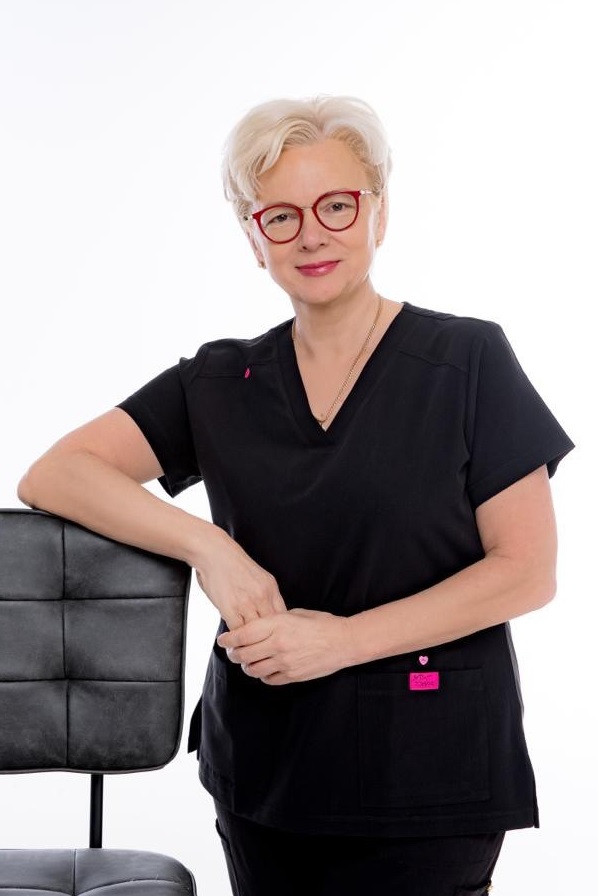
Consultations are provided by top-category specialists under the supervision of Professor, Doctor of Medical Sciences Oksana Petrivna Vitovska.
What could be more precious than the sparkle in your child's happy eyes?
The pediatric comprehensive examination includes:
- Video recording of the strabismus eye position
- Determination of the growth dynamics of the eyeball
- Precise diagnosis of astigmatism based on topographic data
- Determination of refraction in fractional cycloplegia
- Detailed fundus oculi examination under cycloplegic conditions
- Consultation of a pediatric ophthalmologist
- Recommendations for treatment and further monitoring
OOur clinic provides possibilities of ophthalmological examination of children from 0-3 years of age. In our work we use modern methods and developments in the field of pediatric ophthalmology.
≈2 h
Full eye examination time
Why patients choose the German Eye Clinic
Strabismus
Strabismus is a serious disorder of eye interaction, which most often manifests itself in childhood and is accompanied not only by aesthetic changes in the position of the eyes, but also affects the perception and visual acuity of the child. Most cases of childhood strabismus are the result of muscle disorders and can be effectively treated without surgical intervention. In particular, 80% of strabismus cases can be treated with glasses, and the consequences of eye interaction disorders can be treated with special courses of hardware treatment. Surgical treatment is used in case of pronounced disorders or when these methods are ineffective. In our clinic we use the latest methods of surgical treatment under sedation, which allows us to obtain the maximum effect with a minimum period of rehabilitation. If treatment was not started in time, complications may occur in the form of binocular vision disorders (the brain is not able to analyse the volumetric picture from both eyes) or amblyopia (the brain has not learned to process 100% of information from each eye) and unfortunately such complications can be effectively treated only up to 3-6 years of age. This is why early detection of the problem and active treatment can lead to a full recovery.
Do not hesitate to examine your child and start treatment if advised by our specialist.
Orthoptic treatment programmers:
Amblyopia
Course objective
- Adaptation of the child to daily occlusion
- Stimulation of compliance and motivation of the child and parents for long term visual therapy
- Achieving maximum correctable visual acuity in far and near vision
- Consolidation of visual stability over time
- Development of binocular vision
- Stimulation of fine motor skills and hand-eye coordination system in pre-school children
- Achieving the visual acuity of the child at the level of the age norm
- Increasing brain plasticity, maturity, and readiness for schooling
Training devices used
- Personalized occlusion therapy* (individual calculation of the occlusion time in relation to the amblyopia degree and the age of the child)
- LED retinal stimulator SRS-1
- Software complex “Oculist” (Pleoptics-2, Galaxy-3, Tir-3, Ice-2, Crosses-2, Darts-2, Eye
Indications
- Presence of any degree of amblyopia or visual function retardation from the age norm
- Lack of compliance, intolerance to wearing glasses or occlusion therapy at home
- Lack of binocular vision
Class duration
Course duration
Frequency of training sessions
Quarterly
Evaluation
Issuance of a report with complete objective data on the dynamics of visual acuity gain in the far and near amblyopic eye, as well as the condition of binocular vision at the end of the course
Strabismus
Course objective
- Development and consolidation of bifixation
- Training of fusion reserves
- In the presence of stable fusion – development of stereoscopic depth of vision
Used training devices
- Synoptophore
- Computer program “Blade” with the use of haploscopic glasses with color filters
- Oculist software package (Eye, Zebra, Stereopsis programs)
- Combined prismatic instrument “Bernell-o-Scope
Indications
- Partial-accommodative and accommodative convergent strabismus
- Convergent latent strabismus with an unstable angle of deviation
- Development of bifoveolar fusion after surgical correction of strabismus
Course duration
Course duration
Frequency of training
Evaluation of results
Amblyopia + Strabismus
Course objective
- Adaptation of the child to daily occlusion, improvement of compliance with long-term visual therapy
- Achieving maximum corrected visual acuity in far and near vision
- Consolidation of the stability of visual function
- Development and consolidation of bifixation, binocular vision and stereoscopic vision
- Training of fusion reserves
Training devices in use
- Personalized occlusion therapy* (individual calculation of the occlusion time in relation to the amblyopia degree and the age of the child)
- LED retinal stimulator CPC-1
- Oculist software package (“Pleoptics”, “Galaxy”, “Tir”, “Ice”, “X”, “Eye”)
- Synoptophore
- Computer program “Blade” with application of haploscopic glasses with color filters
- Combined prismatic instrument “Bernell-o-Scope
Indications
- Presence of any degree of amblyopia, intolerance to occlusal therapy at home
- Lack of binocular vision
- Partially occlusive and accommodative strabismus
- Divergent latent strabismus with an unstable angle of deviation
- Bifoveolar fusion after strabismus surgery
Course duration
Course duration
Frequency of training
Assessment of results
Rinsing, probing of the lacrimal tract
In our clinic, we perform lacrimal duct probing in children.
If your child is constantly suffering from watery and red eyes, this may be a sign of a blocked lacrimal canal. A timely lacrimal tube probe is a safe and effective procedure that can help eliminate this problem and restore a healthy shine to your child’s eyes.
Why you should choose probing:
- Quick and painless – the procedure takes a few minutes and is performed under local anaesthesia.
- Safe – minimal risk of complications with a professional approach.
- Effective – in most cases, one intervention is enough to fully restore tear flow.
Surgical removal of benign neoplasms of the eye appendages
Benign growths of the eyelids and conjunctiva, such as papillomas, cysts, nevi and other neoplasms, can cause discomfort, aesthetic inconvenience and even threaten eye health. Timely surgical removal is the most effective way to eliminate the problem and prevent possible complications.
Advantages of the procedure with us:
- Safe techniques – we use modern minimally invasive technologies that minimise risks and shorten the recovery period.
- Cosmetic effect – removal without noticeable marks and scars, with maximum preservation of natural beauty.
- Fast recovery – the procedure lasts up to 30 minutes, and rehabilitation is comfortable.
- Individual approach – we select the best solution for each patient.
Don’t put off taking care of your health! Removing tumours is not only aesthetics, but also an important step to preserve your vision.
Diagnosis of eye diseases in children
Learn more →includes all instrumental tests and a doctor's consultation with fundus examination (up to two hours)
Glasses fitting is not included and is billed separately. The examination covers: assessment of visual functions against age norms, video recording of eye position in strabismus, tracking of eyeball growth, precise astigmatism diagnostics from topography, refraction under fractional cycloplegia, detailed fundus examination, paediatric ophthalmologist consultation and treatment/follow-up recommendations
The screening includes: refractometry without cycloplegia, age-appropriate visual acuity test, acuity with trial correction, stereo vision assessment (Lang standard test). It quickly identifies: age norm, reduced vision, amblyopia (one or both eyes), astigmatism, absent binocular vision. If any issue is found, a full planned diagnostic exam is recommended. Please note: the screening format does not include a full doctor's report — only a school certificate is issued
The goal is to assess the child's visual functions and detect any difference between the eyes (amblyopia development). The exam includes video recording of eye position during fixation. Early screening is especially recommended when siblings already have ophthalmic conditions or wear glasses
Our doctors
Children's ophthalmology is often asked
- frequently touches their eyes with their hands;
- squints while outdoors;
- has difficulty tracking moving objects;
- has sustained an injury;
- looks straight ahead but tilts or turns their head.
- red spots are visible in the child’s eyes;
- the child’s eyes twitch or deviate to one side;
- the child has diabetes or other general somatic conditions;
- photographs show that the eyes differ in color under camera flash;
- the pupils differ in size or have other noticeable differences.
Pediatric Ophthalmological Care at Deutsche Augenklinik
Pediatric ophthalmology at our “Zlata” clinic provides a comprehensive range of services for examining and treating eye diseases in children from their first days of life up to 18 years. Children grow, and their vision forms, changes, and improves throughout the developmental period. Attentive care of eye health, professional supervision, and preventive examinations in childhood help detect eye diseases and provide timely professional assistance. A children’s eye clinic in Kyiv should be just as modern, comprehensive, and high-quality as any adult clinic. We adhere to this principle and strive to offer young patients the highest-quality examinations and treatments made possible by modern ophthalmology.
Ensure professional monitoring of your child’s visual system development — and your little one will enjoy excellent eyesight!
The first routine examination should be performed at 2–3 months of age. During this period, the doctor evaluates the condition of the eyes and determines whether the child’s visual skills meet age-related norms. That’s why responsible parents start looking for a pediatric ophthalmology clinic they can trust with this important procedure.
Important to know: An ophthalmological exam at 2–3 months is necessary to rule out the presence of congenital eye and visual apparatus diseases such as congenital cataracts and glaucoma, as well as developmental anomalies of the retina and optic nerve, etc.
If the baby is born prematurely, you should see the doctor within the first month of life and then undergo regular examinations once every 1–2 weeks (depending on the results of the initial exam and the child’s overall condition). A pediatric eye clinic in Kyiv is especially important for preterm infants because they are at risk of developing retinopathy of prematurity, which requires close monitoring and timely professional care.
The second routine exam is needed at 9–10 months old. At this stage, a pediatric ophthalmology clinic can identify strabismus, as well as anomalies of the eye’s optical structure such as astigmatism, hyperopia (farsightedness), and myopia (nearsightedness). The clinic can then recommend effective and safe treatment. If the child’s eyes are healthy, further preventive check-ups should be done annually. Before entering kindergarten or school, an eye specialist’s consultation is mandatory, so childhood vision diagnostics is also necessary at these stages.
Emergency Visits to a Pediatric Ophthalmology Clinic
There are situations in which a child needs immediate professional evaluation and assistance. We recommend visiting a pediatric ophthalmology clinic without delay if you observe any of the following in your child:
- Eye discharge
- Impaired eye movement (strabismus)
- No tracking reflex for moving objects at a distance of 15–20 cm from the face (by the age of 2 months)
- Eye redness
- Unequal pupil size
- Light sensitivity (photophobia)
- Excessive tearing (epiphora)
- Eye or head injury
- Worsening vision, squinting
- An opaque or white pupil (leukocoria) in flash photography
If your little one starts rubbing their eyes, complains of eye pain, or closes their eyes in bright light, do not delay — find a children’s ophthalmology center where you can get a thorough examination and prompt treatment.
Diagnosing Pediatric Ophthalmological Diseases
At our pediatric ophthalmology department, we offer a comprehensive eye exam for your child. Key diagnostic procedures include:
- Autorefraction under cycloplegia (with pupil dilation)
- Autorefraction without cycloplegia (narrow pupil)
- Binocular function testing
- Ophthalmometry
- Assessment of the lens and vitreous body
- Retinoscopy
- Visual acuity testing
- Examination of the eye’s accessory structures (eyelids, palpebral fissure width, etc.)
- Evaluation of oculomotor system function
- Ophthalmoscopy of the fundus
For older children, vision checks may include additional tests, such as:
- Autorefraction
- Non-contact tonometry (measurement of intraocular pressure)
- Biomicroscopy
- Visometry (determining visual acuity)
- Keratotopography (corneal topography)
- Perimetry (assessment of the visual field)
- Ultrasound examination
- Fluorescein angiography (FAG) of the retina
- Optical coherence tomography (OCT)
Modern pediatric ophthalmological diagnostics enables effective and safe treatment. Each treatment program is tailored individually, considering all aspects of the child’s body, age, and any comorbidities affecting other organs and systems.
High-tech equipment, the competence of our doctors, and a multidisciplinary approach to each medical issue allow us to provide effective and safe conservative treatment for a wide range of eye diseases and conditions in children from birth to 18 years of age. Therefore, if you need vision diagnostics for children, you can schedule a consultation by calling one of the numbers listed on our website.
Checking a child’s vision — preserving their health, preventing eye diseases, and effectively and safely overcoming them — is all possible with us. Our clinic’s resources enable all types of diagnostics and treatments used in international ophthalmic practice. We successfully manage most pediatric eye and visual system diseases. Above all, our team strives daily to ensure your children can see the world in all its colorful variety.