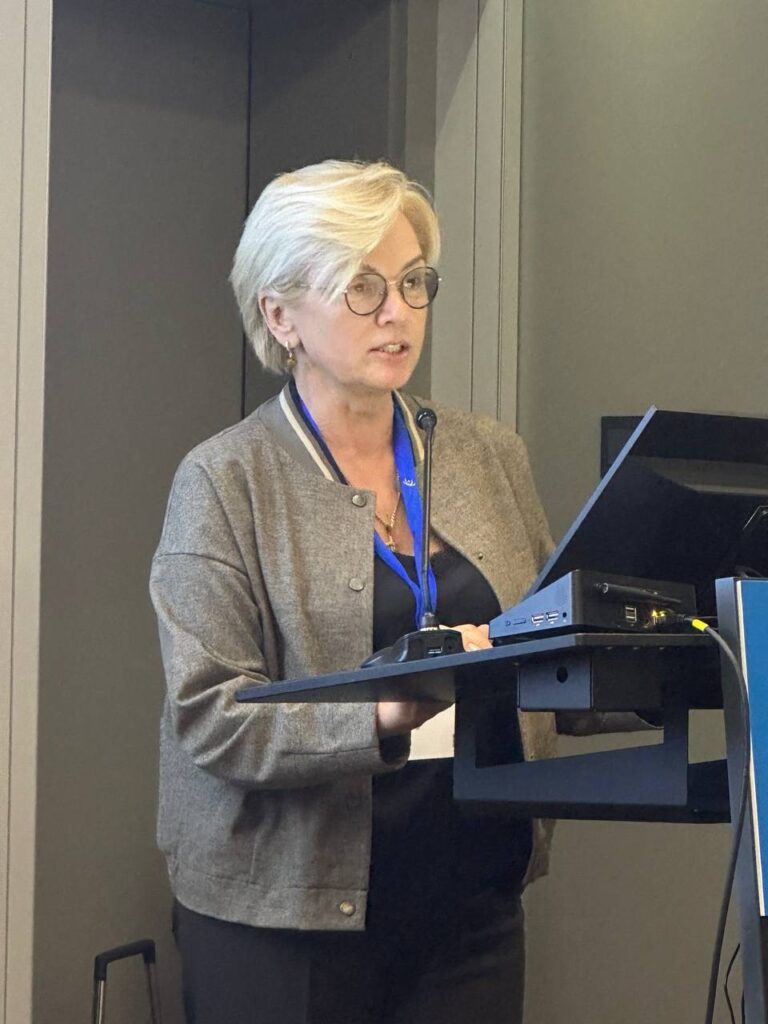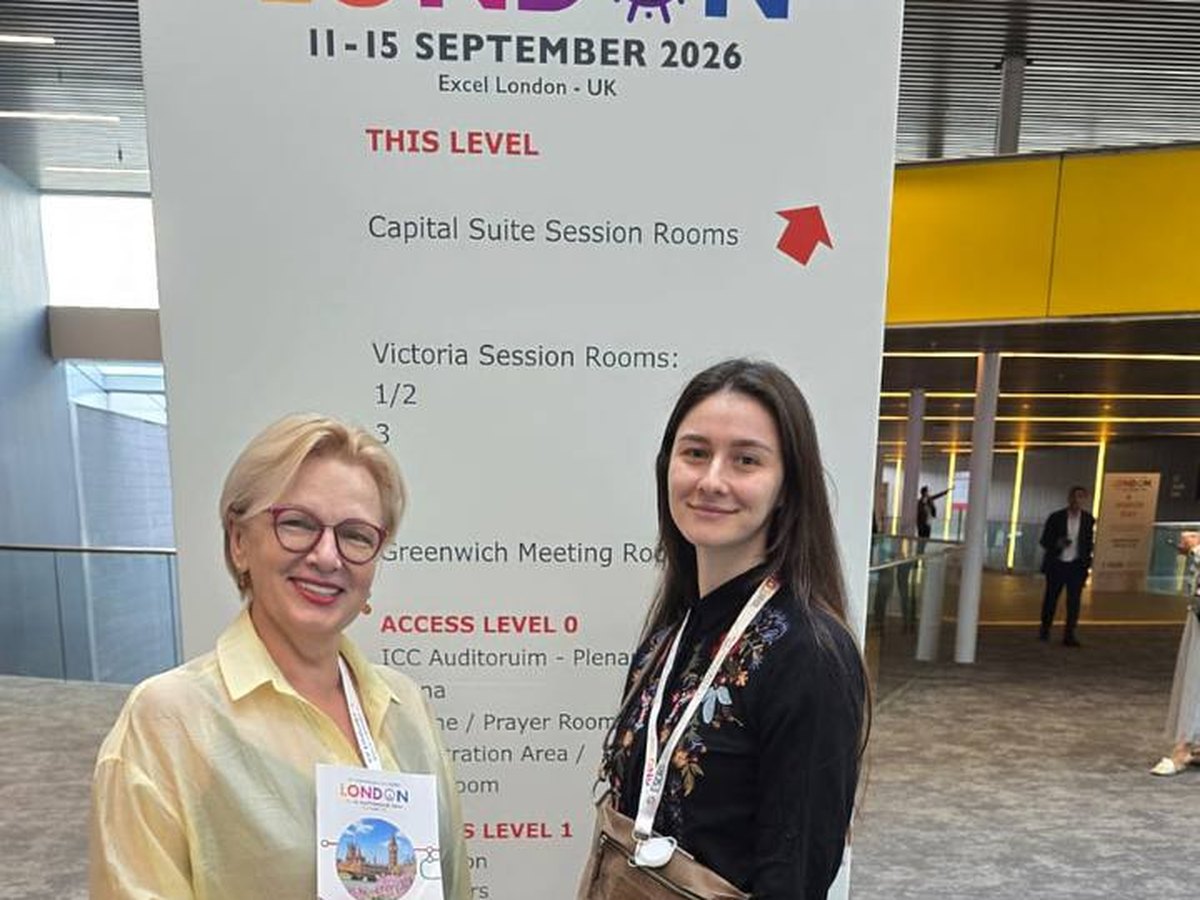
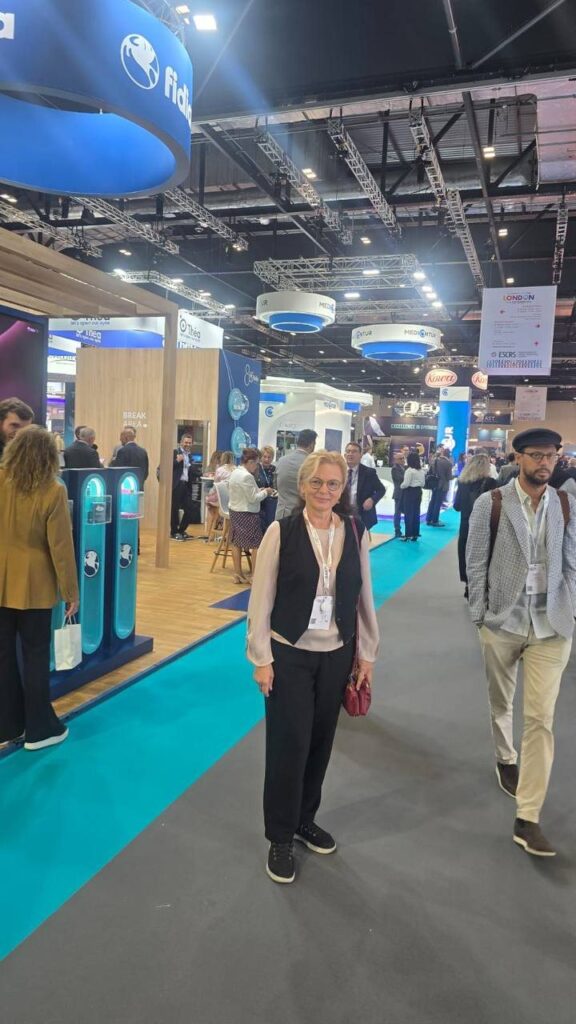
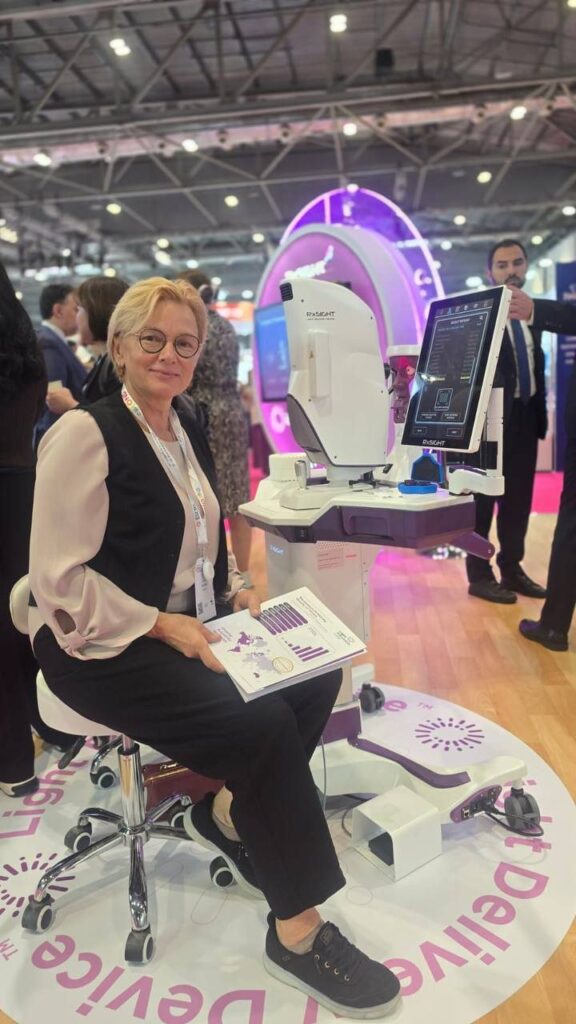
From 11 to 15 September 2026, London (ExCeL London) is hosting the 44th Congress of the European Society of Cataract and Refractive Surgeons (ESCRS) — the largest ophthalmology event in Europe. Doctors from the German Eye Clinic are attending as delegates: listening to presentations, taking part in satellite symposia and presenting their own work to an international audience.

What ESCRS is and why it matters for patients
ESCRS is the venue where new cataract surgery and vision correction technologies are presented long before they become routine practice. This is where the first results for new intraocular lenses, updated calculation protocols and safety data are published.
For a patient this has a very practical meaning: what our surgeons see and assess at the congress today becomes available at the clinic in Kyiv within a few months — with clear indications and a proper understanding of who exactly the technology suits.
What is new in cataract and refractive surgery
Our specialists reviewed updates in three areas:
- Next-generation intraocular lenses — in particular continuous-range lenses that provide good vision at different distances after lens replacement;
- Refractive surgery — current protocols for laser vision correction and patient selection;
- Diagnostics and surgical planning — lens calculation accuracy as the key factor for the outcome.
Galaxy: the first experience in Ukraine — at our clinic
A separate topic at the congress was the RayOne Galaxy spiral intraocular lens by Rayner. It is the world’s first lens with spiral optics, developed with the use of artificial intelligence: it delivers a continuous range of vision — from distance to reading — without abrupt jumps in focus. Since its launch in 2024 it has been implanted more than 200,000 times in 75 countries.

The German Eye Clinic became the first clinic in Ukraine to gain experience with the Galaxy lens. At the congress, Rayner specialists specifically highlighted our clinic for its very strong Galaxy implantation outcomes.

Good outcomes rest on concrete work: careful patient selection, precise preoperative diagnostics, correct lens calculation and a refined surgical technique. It is the combination of these details that determines how well a person will see after surgery.
Ukrainian ophthalmology on the international stage
The clinic’s participation in ESCRS 2026 was not limited to attending lectures. The congress hosted a one-day meeting of the World Society of Paediatric Ophthalmology and Strabismus (WSPOS), where our doctor Valeriia Sarhosh presented on myopia control in children.
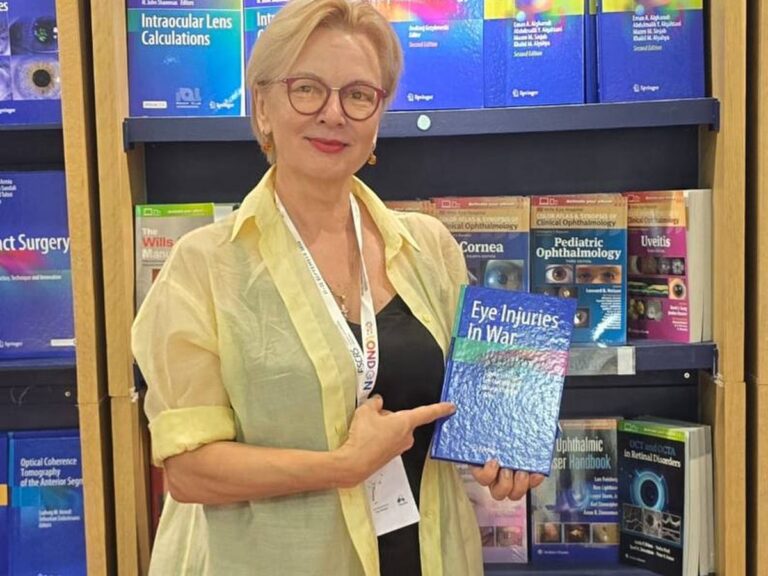
Professor Oksana Vitovska presented a new international book on war eye injuries — a joint work of German and Ukrainian specialists, of which she is an author and co-editor.
We cover both events in more detail in separate articles.
Book a consultation
If you are planning cataract surgery or considering vision correction, book a diagnostic appointment at the German Eye Clinic. Your doctor will select a solution that fits your eyes, lifestyle and visual demands.